
How do you practice self-care?
Nothing beats a good night’s sleep. It’s the ultimate reset — the moment your mind and body pause, repair, and prepare to try again tomorrow. But as I’ve grown, I’ve come to realize that self-care is so much more than rest.
True self-care is about creating space — not just to pause, but to live with meaning.
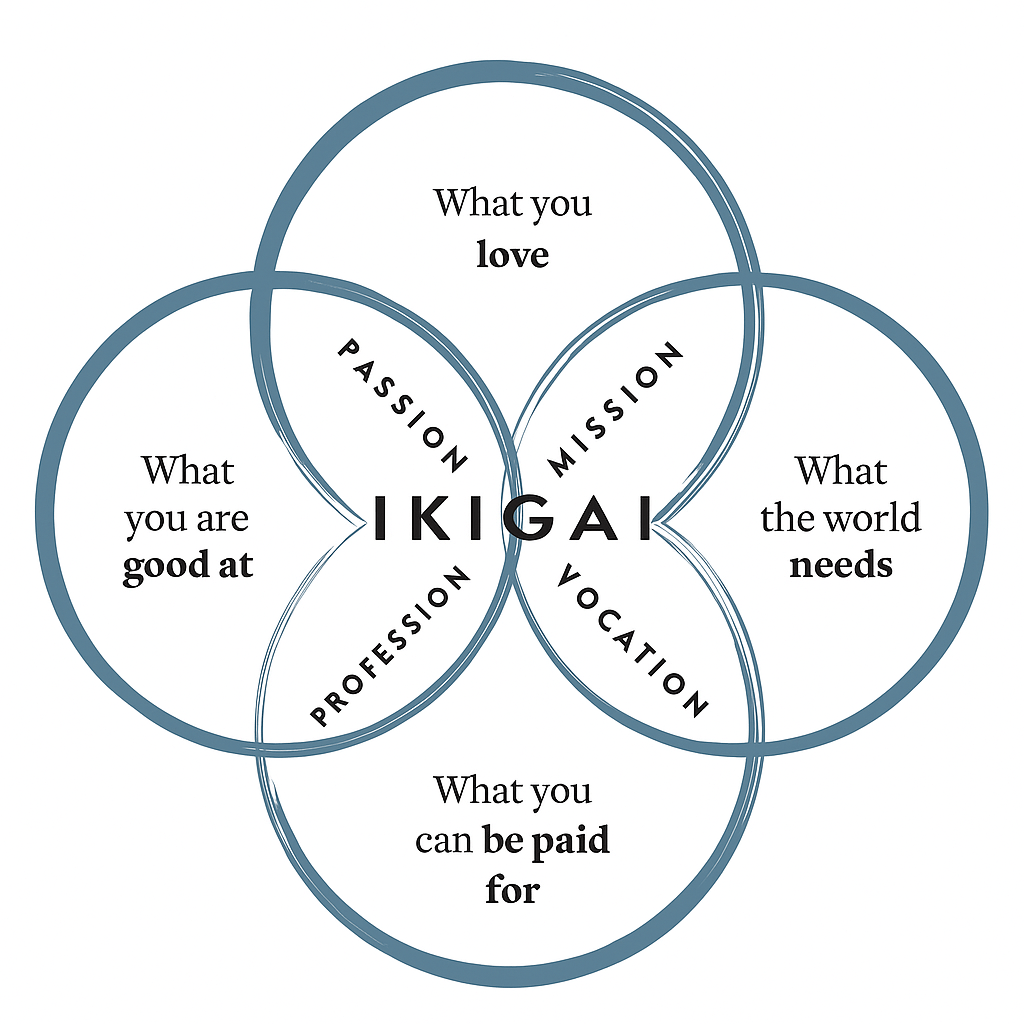
That’s where the Japanese concept of Ikigai comes in. It’s one of my favorite ideas to revisit. Ikigai is often described as the intersection of what you love, what the world needs, what you can be paid for, and what you’re good at. But beyond the diagram, it’s about discovering that sweet spot of purpose — where your passion meets action, and your work feels like flow.
When you’re doing something that lights you up — whether it’s coding, designing, writing, teaching, or caring for someone — you’re not just working. You’re healing. You’re aligned. You’re in a rhythm that energizes instead of depleting.
But purposeful living doesn’t mean constant hustle. Sometimes, self-care is giving yourself permission to feel — to sit with your emotions instead of bottling them up, to admit you’re tired, or to simply say “I need a break” without guilt.
It’s in those quiet moments — journaling, walking slowly, sipping tea, or just watching the sky — that you reconnect with yourself. And in that reconnection, you find clarity, calm, and courage to keep going.
If this resonates with you, here’s a gentle recommendation:
📚 Read “Ikigai: The Japanese Secret to a Long and Happy Life.”
It’s a simple yet profound book that reminds us to slow down, to find joy in the small things, and to live with intention.
Because at the end of the day, self-care isn’t a checklist — it’s a mindset.
And purpose? That’s the deepest kind of care you can give yourself.
 CodeWithKriti
Leave a comment